
The house style.
Every choice, and the reason behind it.
Fit. Traditional in proportion, and true. Cut neither loose nor tight, so the cloth drapes on the body instead of pulling against it or hanging off it. A garment that grips looks like it was bought a size down. One that hangs looks borrowed.
Construction. Full canvas, built soft. Structured enough to do benefit your silhouette, soft enough that you look forward to putting it on.
Handwork. Hand stitching is done where it changes how the garment behaves, because a needle can be adjusted at every stitch and a machine cannot. It holds shape where shape is wanted and leaves the cloth free to move everywhere else, which is what lets a jacket feel soft without going shapeless. Buttonholes, buttons, the undercollar and the edges are all worked by hand, on jackets and trousers alike.
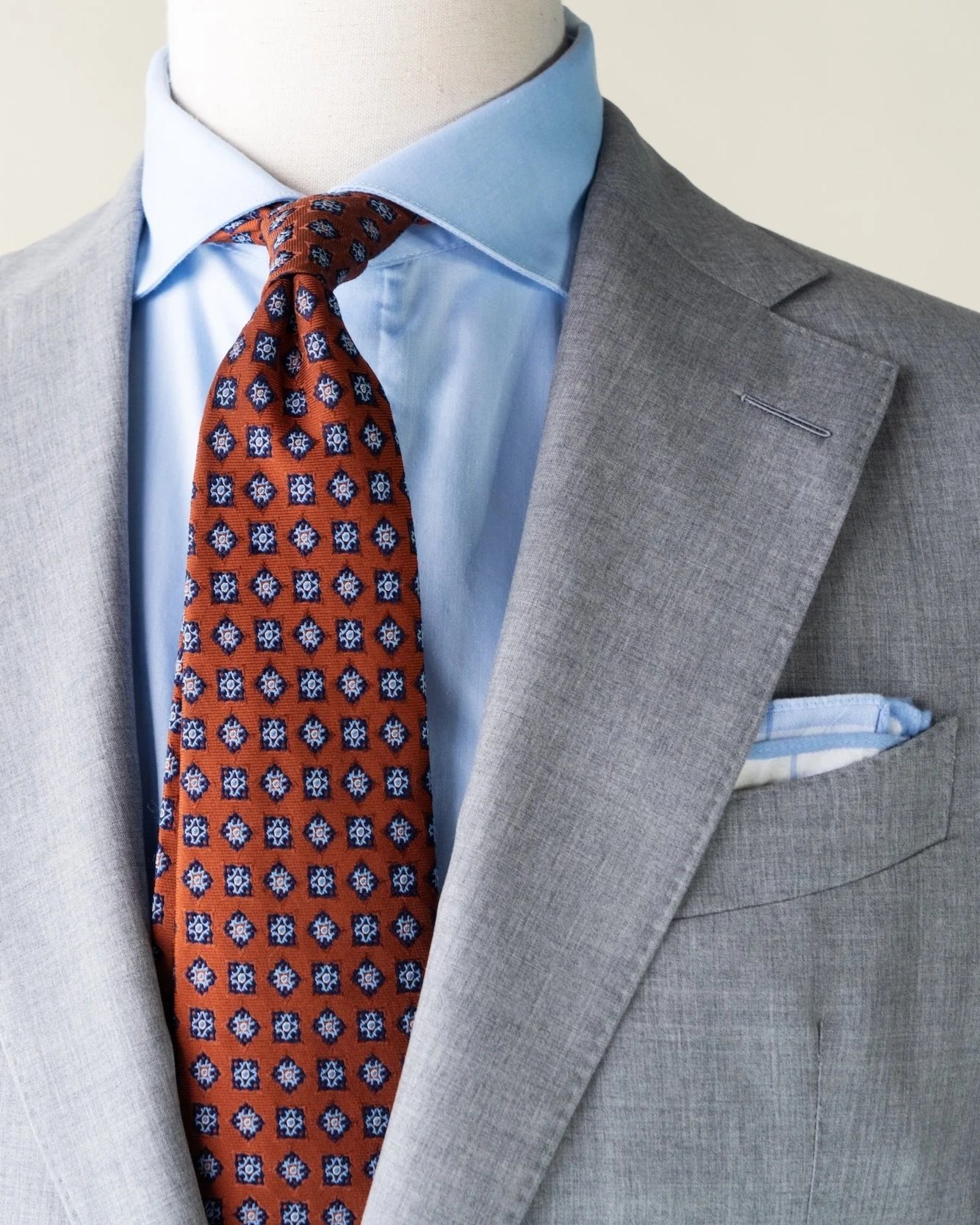
The jacket
The house jacket is single breasted, two button, with a notch lapel and flap pockets at the hip. A barchetta breast pocket that follows the chest rather than cutting across it. Four buttons at the sleeve, set to kiss. Double vents, cut high enough to fall closed again when you sit or reach rather than splaying open behind you.
Our odd jacket house style runs differently: three-roll-two, patch pockets, with three kissing buttons on the sleeve. Double breasted is 6x2 with a peak lapel, and can be made on either. Formalwear follows its own rules, which are worth a conversation rather than a paragraph.
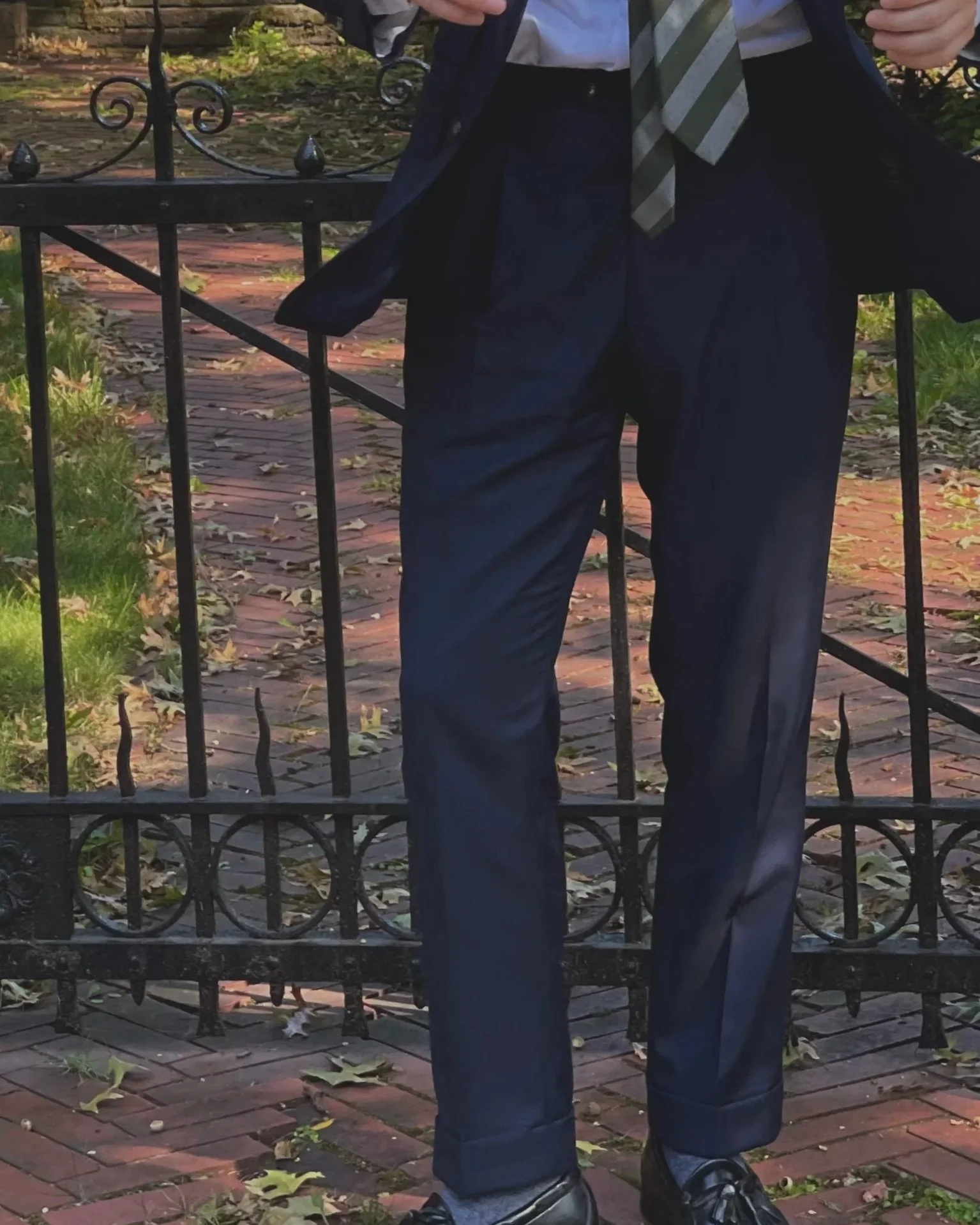
The trousers
Every model sits at the natural waist, on top of the hips rather than below them. It is the single choice that does the most for how a man looks in trousers, and it is the one most often made wrong.
Suit trousers have double reverse pleats, side tabs on the waistband, slanted jetted pockets set off the seam, and no back pocket. Cuffed, and lined to the knee at the front so the cloth hangs rather than clings.
Odd trousers are cut a little easier: a single reverse pleat, one back pocket on the right, slanted hip pockets. Casual pants drop the pleats entirely, take belt loops, two back pockets, no cuff, and no lining.
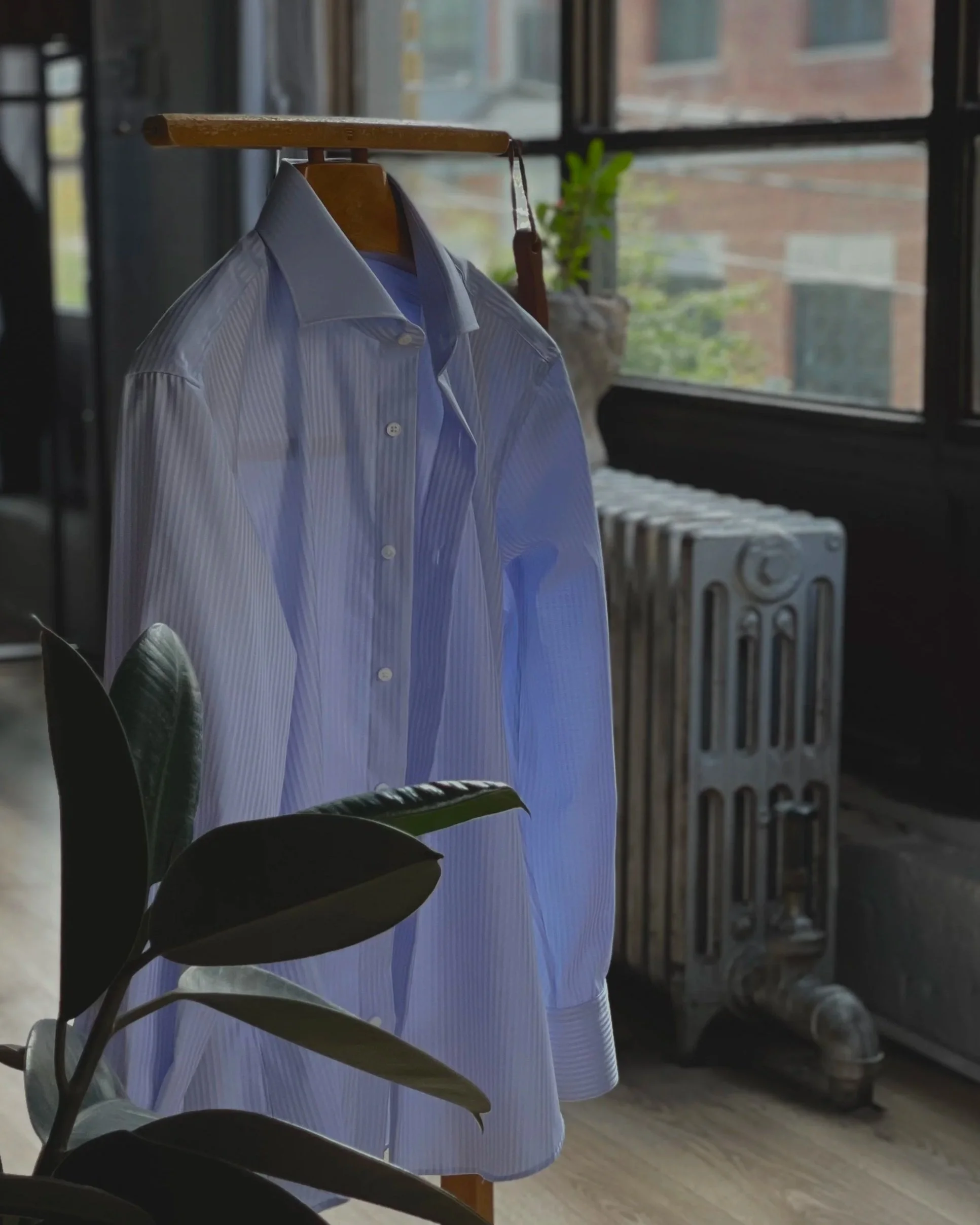
The shirt
The standard collar is a wide spread. It holds its shape under a jacket, frames a tie properly, and still looks right open at the neck. It is the starting point rather than the only choice, and other collars are made when your face, your build or the way you dress calls for something different.
The front is plain, with no placket. The yoke is split down the middle, so each shoulder can be cut to its own line and the back stays clean. A round two-button cuff is standard, and French is there when you want it. No pocket, and a curved hem that stays tucked.
If you would like, your initials are set at the left waist, in thread matched to the shirting fabric.
Changing things
The details on this page are defaults, and each one was chosen for a reason. Some of them can change.
That happens at the consultation, in conversation. Bring what you have in mind, hear the reasoning behind how it is done now, and if we both agree a change serves you better, it gets made. A few things stay as they are because changing them would work against the garment, and when that is the case, you will know why.
Now make it yours.
This is where every garment begins. An hour at your home or office is where it becomes yours.